Road Construction Machines: Guide to Types and Construction Uses
Roads play an essential role in modern life. They connect cities, support transportation, and help move goods and people efficiently. Behind every smooth road or highway is a group of powerful tools known as road construction machines. These machines make the process faster, safer, and more accurate than traditional manual methods.
Clearing trees comes first when roads take shape, followed by grading the ground below. Machines built for digging show up early, doing work that hands cannot manage. Once the earth lies flat and smooth, another kind of vehicle rolls in - this one carries stone or gravel. Layers go down slowly, each one pressed hard so nothing shifts later. Different tools appear at different times, matching the job at hand. Strength matters here, which explains why only tough machinery lasts long.
Heavy diggers shift earth before smooth rollers press down fresh pavement layers. Though different in shape, each vehicle shares one job - preparing ground for travel. What looks like chaos on site follows careful steps behind the scenes. Rolling weight packs soil tight so rain won’t wash it away later. Even small adjustments in angle or speed change how well a surface lasts. Machines move in sequence, not all at once, timing their roles like parts of a clock.
This guide covers the main machines found on road building sites, showing what each one does alongside its role in today's large scale projects. What powers progress often rolls on tracks or tires, doing heavy tasks that shape highways and streets alike. Heavy gear runs behind every paved surface you drive on, making tough jobs faster while shaping solid ground beneath asphalt layers.
Understanding the Concept
Starting from cleared ground, road work sets down a firm path meant for cars to move across without trouble. Each stage stacks one part above another - the groundwork first, then a middle section, finally topped by what you see and drive on. Layering matters because strength comes from how each level supports the next.
Without the right equipment, tasks drag on too long. Though built for heavy loads, these machines move dirt, stone, and supplies with careful control. Machines made for roads shift massive amounts - yet stay accurate, keep workers safe.
These machines perform tasks such as:
- Clearing land and removing obstacles
- Digging and shaping the ground
- Transporting soil or materials
- Spreading asphalt or concrete
- By squeezing layers together, the road becomes sturdy. Strength comes when each level is pressed down tight. Pressure holds everything in place. A solid base forms through this method. Without gaps, the surface lasts longer
Out on the open road, highway construction gear faces tough conditions every day. Some run nonstop, shifting tons of material without slowing down. Built tough, they keep crews moving forward on big jobs that take months to finish.
Putting machines together lets road crews shape ground fast while building paths meant to hold up over time.
Key Types and Categories
From bulldozers to pavers, varied equipment handles tasks on job sites. One kind flattens earth while another lays down asphalt layers.
Some of the most common equipment used in road construction includes:
- Excavators
- Bulldozers
- Motor graders
- Asphalt pavers
- Dump trucks
- Road roller machines
From start to finish, this setup handles every step of road surface work. The gear works as one unit, smoothing out each phase. Each piece plays its part without needing extra help. One after another, they prep, shape, then refine the material.
Excavators
Heavy digging tools called excavators show up often on road jobs. These big rigs come with a scoop linked to an extended mechanical limb.
Their main tasks include:
- Digging trenches
- Removing soil and rocks
- Clearing debris from construction areas
- Preparing foundations for road layers
With a spinning bucket, excavators handle tight spots easily. Curved roads or bumpy ground? They move right through without trouble.
Bulldozers
Front of it holds a heavy steel plate, tough enough to shift earth. Moving forward, that big tool scrapes away piles of dirt or broken stuff. Force behind the machine shifts loose material step by step. Ground changes shape as weight drives through each pass.
Common bulldozer activities include:
- Clearing land before construction begins
- Moving large amounts of earth
- Leveling uneven surfaces
Heavy bulldozers belong on tough job sites where power matters more than finesse. Their toughness stands out when conditions turn harsh. Machines like these push through chaos others avoid.
Motor Graders
Underneath its body, a motor grader carries a lengthy blade that shifts height and angle. Shaping roads is what these vehicles are built for.
Before any pavement goes down, they work to make sure the ground sits flat and even. Ground prep like this sets the stage without drawing attention. A steady base comes together when each section aligns just right. Smoothness matters most where layers meet below. Leveling happens quietly but plays a big role in what follows.
Motor graders are commonly used for:
- Smoothing soil layers
- Creating precise slopes for drainage
- Preparing surfaces for asphalt or concrete
Water pooling slows when the ground slopes just right, so the roadway lasts longer. Ground that falls away smoothly keeps puddles from forming, making the pavement stronger over time.
Asphalt Pavers
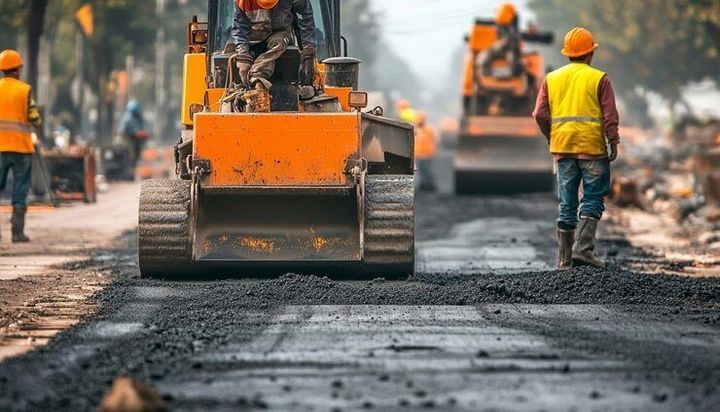
Spreading hot mix onto groundwork - that's what these machines handle near the end of road projects. Laying it smooth, without bumps, falls to them once the base is ready.
A machine rolls out hot material, leaving behind an even surface. Smoothness comes from steady movement across the ground. Thickness stays uniform because of careful feeding ahead of the screed.
Important functions of asphalt pavers include:
- Distributing asphalt mixture
- Leveling the road surface
- Preparing the surface for compaction
Once the blacktop goes down, a different piece of equipment rolls over it to pack the surface tight.
Road Roller
Heavy wheels roll slow across fresh pavement, flattening layers beneath their weight. That round steel barrel smashes gravel and tar into a tight base, shaping what becomes the ground we drive on.
When soil gets compacted, spaces between particles shrink - this means less room for air gaps. The result? A firmer base forms under each layer of the road.
Road rollers are used for:
- Compressing soil layers
- Compacting gravel foundations
- Strengthening asphalt surfaces
Built right, a road handles big loads without shifting too much. When packed well, it stays put even after years of trucks rolling by.
How It Works
A single path takes shape when tools work together, one stage after another. Machines move in rhythm, each task flowing into the next without rush. Progress shows only when every piece finds its place slowly.
Most times, it moves through steps like these
- Site preparation
- Starting out, workers clear the site piece by piece. Heavy machines like bulldozers haul away trees while excavators dig up stones. With debris gone, the area settles into place. Now it's ready for what comes next.
- Earthwork and excavation
- Starting with a dip of the bucket, machines carve into the earth. Where dirt piles up, it gets shifted elsewhere by heavy arms. A steady push clears space for what comes next. Ground levels change as material moves piece by piece.
- Grading and leveling
- Water runs off better when the land is shaped just right. That shape comes from machines that even out dirt while tipping it slightly. These tools leave a flat path with a small lean so wet stays on the move.
- Base layer preparation
- Gravel, once dumped on cleared soil, gets flattened by a heavy roller. Under the weight of the machine, the stones lock together, forming a firm base.
- Surface paving
- Pouring out smooth, the machine pushes melted rock along the street. Hot at heart, it flows like thick syrup before cooling down.
- Final compaction
- Over the fresh asphalt, a heavy roller moves again and again. Through repeated passes, the ground firms up while uneven spots fade away.
From bulldozers to pavers working together, big road jobs move fast without skipping steps. One machine follows another, each doing its part so nothing slows down. Smooth coordination keeps everything on track, making sure roads meet strict requirements. When machines sync up like this, results stay consistent across long stretches.
Benefits and Advantages
The use of modern road construction machines brings many benefits to infrastructure development.
Some of the most important advantages include:
- Improved efficiency
- Fast work happens when machines take over jobs people used to do by hand. In just hours, wide stretches of soil get ready - no slow digging needed.
- Better accuracy
- Graders shape the ground just right, so roads stay steady over time. With these machines, flatness and tilt get controlled down to detail. Roads built this way handle stress better, thanks to consistent grading underneath.
- Stronger road surfaces
- Built tough through machine-packed layers, solid ground comes from rollers pressing down hard. Roads stay strong under constant loads when compression does its job right.
- Enhanced safety
- Machines step in where heavy lifting or danger once kept people busy. Workers now avoid strain when tools take over tough jobs. Risk fades a bit more each time automation handles what humans used to do by hand.
- Consistent results
- Each stretch of pavement comes out the same, thanks to machines handling the work. Precision follows step by step, guided by steady mechanical arms. No hand adjustments needed when gears and sensors set the standard. Consistency appears where automation takes over shaping the surface. Uniform results emerge under programmed routines. Every segment meets the mark without exception.
These days, machines built for laying roads do what once seemed impossible - keeping travel steady and safe. A network that holds up begins with tools designed to last.
real world examples and applications
Out on highways, earthmovers chew through soil like hungry beetles. Sometimes they’re seen near bridges, where bulldozers nudge piles into place. Across continents, rollers flatten surfaces under pale morning light. Where new lanes take shape, excavators twist slowly, arms raised. Near city edges, graders slice thin layers without stopping. Dust hangs above them all, swirling in hot gusts.
Urban road development
Out past the suburbs, fresh lanes get carved into the earth as vehicles pile up day by day. Treads and blades shape tight corridors, pressing down gravel into flat stretches where buses roll alongside bikes and sedans.
Highway expansion
Fresh ground gets shifted by heavy equipment when building long roads. Because the job is massive, only strong vehicles can handle moving so much earth just to set broad layers of pavement.
Rural road improvement
Out in the countryside, building roads links small communities with bigger towns and key travel points. Thanks to equipment, paving routes becomes doable far off in isolated spots.
Airport runways
Pavement built for planes often looks like roadwork done by big machines. Tough materials get layered down so jets can land without breaking the ground beneath them.
From city streets to mountain trails, heavy equipment helps keep travel moving. Whether pushing dirt or laying asphalt, each machine adapts to where it works. In deserts or coastal zones, their role stays clear - moving materials shapes routes people follow. Through rain, heat, or dust, these tools stand ready. Each job changes slightly, yet purpose remains: building paths connects places.
Key Things to Know
Weather shapes how road machines work on a job site. Equipment choice depends heavily on terrain type. Crew experience affects machine handling every day. Project size decides which models show up onsite. Time limits change how fast crews operate machinery.
Ground conditions
Depending on whether the ground is soft or rocky, different tools come into play. When earth gives way under pressure, packing it down becomes necessary before work continues. Hard surfaces made of stone call for heavy-duty diggers just to make a mark. The machine choice shifts entirely based on what lies beneath the surface.
Project scale
Some tiny upgrades on roads need only a few machines. Yet when big highways go up, different kinds of heavy gear must move in sync. Machines dance around each other where the work stretches long.
Environmental considerations
Water runoff needs thought, just like soil washing away and the life around it. Grading done right shapes how a site fits into nature. Because slopes guide water, they also shape what grows nearby.
Material selection
Concrete needs heavy rollers, while gravel spreads better with graders. Asphalt often uses pavers followed by vibratory compactors. Each material responds differently under pressure.
Figuring out these elements lets engineers design smoother building workflows while aiming for long-lasting pavement results.
future trends and industry insights
Besides new tools popping up, fresh methods keep reshaping how roads are built. Machines now do tasks once handled by hand, while smarter designs improve durability over time.
Some emerging developments include:
- Smart construction technology
- Fitted with sensors, today’s equipment tracks performance down to the smallest detail. While digital tools run in the background, they quietly guide adjustments. As alerts pop up, workers respond before small issues grow. Without constant guesswork, precision becomes routine. These built-in monitors shift how tasks unfold on the factory floor.
- Automated equipment
- Out of nowhere, a few devices now handle jobs on their own - just needing slight human oversight. These systems operate partly alone, stepping through chores without constant direction.
- Sustainable construction practices
- From rooftops made of old bottles to walls shaped by reused steel, builders test new ways. Not just stronger but kinder to air and soil, each method tries less harm. Through rain or sun, these ideas stand while saving resources. Some come from trash others from labs yet both aim low waste. With time even sidewalks might hold past lives beneath feet.
- Improved machine efficiency
- Some fresh blueprints focus on cutting power needs without losing speed. A different approach keeps things fast but uses less juice along the way.
One thing might change how machines build roads soon - efficiency could rise across big projects. Not every shift feels obvious at first, yet new methods tend to stick once they start working. Years down the line, today’s tweaks might look like turning points. Machines running smoother? That often follows quiet upgrades nobody notices right away. Progress shows up in small steps more than sudden leaps.
Conclusion
Starting with clearing the ground, big diggers reshape the earth slowly. Then comes the turn of heavy rollers pressing down layer after layer. Machines like graders smooth things out where needed. Instead of speed, precision guides how asphalt layers go down. Pavers move forward carefully, leaving behind flat, even surfaces. Each tool has its moment, doing what it's built for. Strength in roads begins long before vehicles ever pass.
Starting with heavy-duty tasks, bulldozers push through rough terrain to clear space for new routes. Following behind, motor graders fine-tune the ground, ensuring a smooth base forms underneath. Then comes the steady rhythm of the road roller, pressing down layer by layer with quiet force. These machines work one after another, each step locking into place without wasted motion. Engineers guide them closely, eyes on measurements, hands ready to adjust. Safety stays woven into every move, built into how things flow from start to finish.
Watching how tools on road jobs work gives a clearer view of the clever design built into today’s transport routes. When tech moves forward, so do the machines that shape highways - growing smarter, lasting longer, forming paths where people and goods keep moving. Machines adapt, just like the needs they meet.