Tube Bending Machines Explained: Process, Types, and Applications
Tube bending machines are widely used in modern manufacturing. They help shape metal tubes into curves and angles without breaking or weakening the material. You can find bent tubes in everyday products like bicycles, furniture, vehicles, and even building structures.
These machines play an important role because they make production faster, more accurate, and consistent. Instead of bending tubes by hand, industries rely on machines to achieve precise shapes with minimal effort. This improves quality and reduces material waste.
Understanding how these machines work can help you see their importance in many industries.
Understanding the Concept
A tube bending machine is a tool designed to bend metal tubes into specific shapes. The process involves applying force to the tube while controlling its position and angle.
The goal is to create smooth bends without damaging the tube. If not done correctly, tubes can wrinkle, flatten, or crack. That is why specialized machines are used.
There are different methods of bending, but most machines follow the same idea:
- Hold the tube securely
- Apply controlled pressure
- Bend the tube to the required angle
For example, think about the curved pipes under a sink or the frame of a motorcycle. These shapes are created using tube bending machines.
Key Types or Categories
There are several types of tube bending machines, each designed for specific tasks. Choosing the right type depends on the material, thickness, and required precision.
1. Manual Tube Bending Machines
These are simple machines operated by hand. They are suitable for small tasks and basic shapes.
2. Hydraulic Tube Bending Machines
These machines use hydraulic pressure to bend tubes. They are stronger and can handle thicker materials.
3. CNC Tube Bending Machines
CNC stands for Computer Numerical Control. These machines are automated and follow programmed instructions to create precise bends.
An automatic tube bending machine falls under this category. It can perform multiple bends with high accuracy and minimal human involvement.
4. Mandrel Tube Bending Machines
A mandrel tube bending machine uses a support tool called a mandrel inside the tube. This prevents the tube from collapsing during bending.
5. Heavy-Duty Tube Bending Machines
A heavy duty tube bending machine is built for industrial use. It handles thick, large, and strong materials commonly used in construction and heavy equipment.
6. Rotary Draw Bending Machines
These machines pull the tube around a die to create smooth and accurate bends. They are often used when precision is important.
Important Subsections
What is a Mandrel?
A mandrel is a rod inserted inside the tube during bending. It supports the tube walls and keeps the shape intact. This is especially useful for thin tubes.
What is CNC Control?
CNC control means the machine follows digital instructions. This allows repeatable and accurate bending without manual adjustments.
What is a Die?
A die is a shaped tool that guides the tube during bending. Different dies are used for different angles and sizes.
How It Works
The tube bending process may look complex, but it can be understood in simple steps.
-
Tube Placement
The tube is placed into the machine and secured tightly. -
Alignment
The machine aligns the tube according to the required bending angle. -
Clamping
Clamps hold the tube in position to prevent movement. -
Bending Action
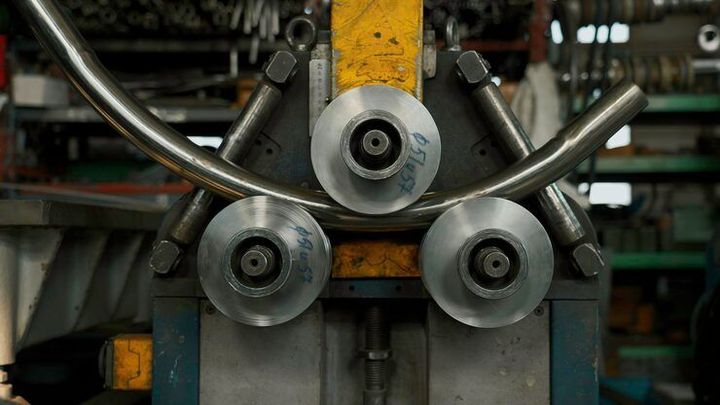
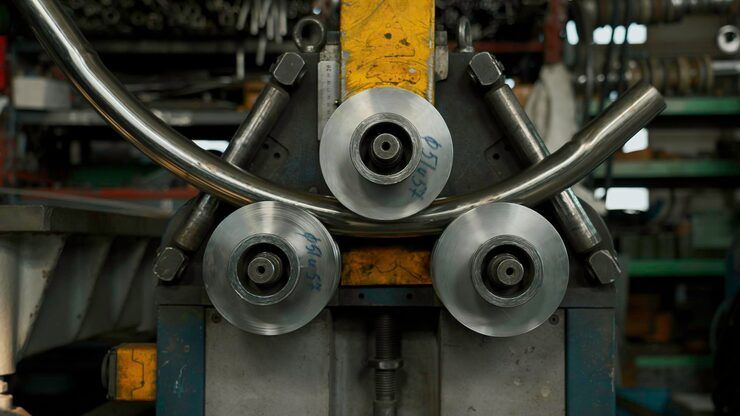
The machine applies force using rollers, dies, or hydraulic systems to bend the tube. -
Shape Formation
The tube is bent into the desired angle or curve. -
Release
The finished tube is released and checked for accuracy.
In an automatic tube bending machine, these steps are controlled by a program. This reduces human effort and improves consistency.
Benefits and Advantages
Tube bending machines offer several practical benefits across industries.
-
High Accuracy
Machines produce consistent and precise bends every time. -
Time Efficiency
Automated systems complete tasks quickly compared to manual methods. -
Reduced Material Waste
Accurate bending reduces errors and saves raw material. -
Versatility
Machines can handle different tube sizes and materials. -
Improved Safety
Less manual handling reduces the risk of injuries. -
Better Quality
Smooth and uniform bends improve the final product appearance.
For example, a mandrel tube bending machine ensures that thin tubes do not collapse, which improves quality in applications like automotive parts.
Real-World Examples or Applications
Tube bending machines are used in many industries. Here are some common examples:
Automotive Industry
An automotive tube bending machine is used to create parts like exhaust systems, roll cages, and fuel lines. These parts require precise shapes for proper fitting.
Construction Industry
Bent tubes are used in railings, structural frames, and scaffolding. A heavy duty tube bending machine is often used for these applications.
Furniture Manufacturing
Chairs, tables, and decorative items often use bent metal tubes for design and strength.
Aerospace Industry
Aircraft require lightweight yet strong components. Tube bending machines help create complex shapes needed for aircraft systems.
Plumbing Systems
Pipes used in water systems are bent to fit into tight spaces. This reduces the need for extra joints.
Bicycle Manufacturing
The frames of bicycles are made using bent tubes to ensure strength and aerodynamics.
Important Factors to Understand
Before working with tube bending machines, it is important to consider several factors.
Material Type
Different materials behave differently during bending. For example:
- Steel is strong but requires more force
- Aluminum is lighter and easier to bend
Tube Thickness
Thicker tubes need more force and stronger machines.
Bend Radius
This refers to how tight the bend is. A smaller radius means a sharper bend.
Springback Effect
After bending, the tube may slightly return to its original shape. Machines must compensate for this.
Tool Selection
Choosing the right die and mandrel is important for accurate results.
Machine Capability
Not all machines can handle every type of tube. For example, a heavy duty tube bending machine is required for large-scale industrial tasks.
Understanding these factors helps achieve better results and avoids damage to the material.
Future Trends and Industry Insights
Tube bending technology continues to evolve with new advancements.
Increased Automation
Modern machines are becoming more automated. Automatic tube bending machine systems are improving productivity and reducing manual effort.
Smart Manufacturing
Machines are now connected to digital systems. This allows better monitoring and control of the bending process.
Improved Precision
Advanced CNC systems provide higher accuracy and repeatability.
Energy Efficiency
New machines are designed to use less energy while maintaining performance.
Lightweight Materials
Industries are shifting towards lighter materials, which require more precise bending techniques.
Customization
Manufacturers are focusing on flexible machines that can handle different designs without complex adjustments.
These trends show that tube bending machines will continue to play a key role in modern manufacturing.
Conclusion
Tube bending machines are essential tools in many industries. They help shape metal tubes into precise forms used in everyday products and large-scale structures.
From simple manual machines to advanced CNC systems, each type serves a specific purpose. Machines like the mandrel tube bending machine and heavy duty tube bending machine ensure high-quality results even in demanding applications.
The process may seem technical, but it follows a clear sequence of steps. With the right machine and proper understanding, manufacturers can achieve accurate and efficient results.
As technology advances, these machines are becoming smarter, faster, and more reliable. Their importance will continue to grow as industries demand better precision and efficiency.