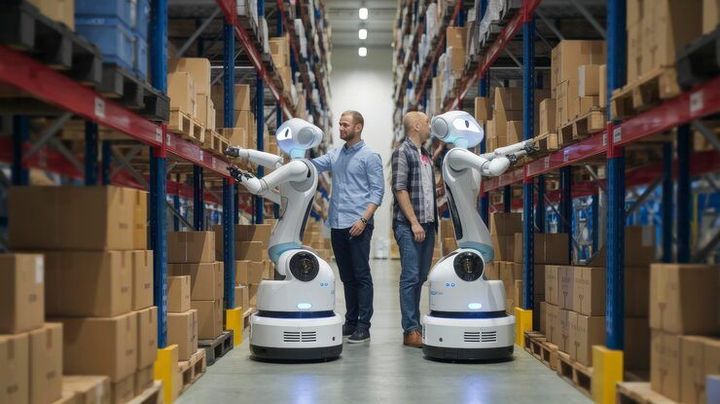
These robots help manage storage, picking, and movement of goods. They reduce human effort and improve workflow. From small storage units to large distribution centers, automation is becoming a key part of daily operations.
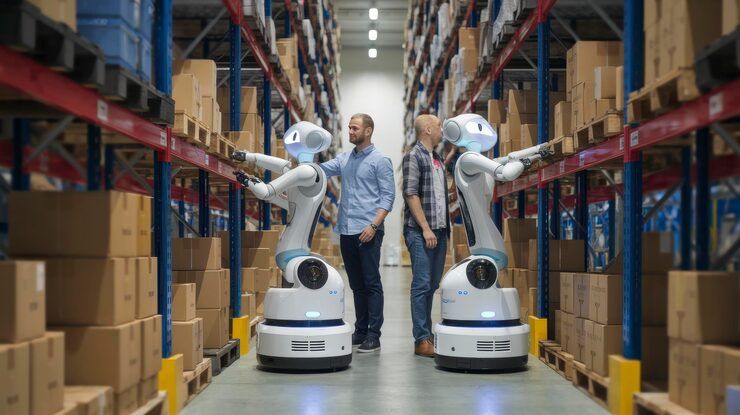
Understanding how warehouse robots work and where they are used can help you see why they are becoming essential in modern logistics.
Understanding the Concept
Warehouse automation robots are machines designed to perform tasks inside a warehouse with minimal human involvement. These robots can move items, pick products, sort packages, and even transport goods across different sections.
The main idea is simple: replace repetitive manual tasks with automated systems that work faster and with fewer errors.
Some robots follow fixed paths, while others use sensors and mapping technology to move freely. These are known as autonomous warehouse robots, which can make decisions based on their surroundings.
Another important part of automation is automated picking systems. These systems are designed to identify, pick, and place items without human help.
In simple terms, warehouse robots act like smart assistants that handle physical work inside a warehouse.
Key Types or Categories
There are several types of warehouse automation robots, each designed for specific tasks.
Mobile Robots
These robots move around the warehouse carrying goods from one place to another. They are widely used in large facilities.
Picking Robots
These robots focus on selecting items from shelves. They are often part of automated warehouse picking systems.
Sorting Robots
Sorting robots organize packages based on destination, size, or category. They help speed up order processing.
Collaborative Robots
These robots work alongside humans. They assist workers by handling heavy or repetitive tasks.
Autonomous Robots
Autonomous warehouse robots use sensors and cameras to navigate without fixed tracks. They can adjust their path in real time.
Important Subsections
Navigation Systems
Robots use different methods to move around:
-
Sensors detect obstacles
-
Cameras help with mapping
-
Pre-set routes guide movement
Gripping Technology
Picking robots use special tools to grab items:
-
Suction cups for smooth surfaces
-
Mechanical arms for heavier items
-
Soft grips for fragile products
Control Systems
Robots are controlled through central systems that manage tasks and movement across the warehouse.
How It Works
The process of warehouse automation robots is simple when broken into steps:
-
Order Entry
A request for items is received in the system.
-
Task Assignment
The system assigns tasks to available warehouse robots.
-
Navigation
Robots move to the correct storage location using sensors or mapped routes.
-
Item Identification
The robot identifies the correct product using scanning or recognition tools.
-
Picking
In automated picking systems, the robot picks the item carefully.
-
Transport
The robot carries the item to the packing or sorting area.
-
Sorting and Dispatch
Items are organized and prepared for shipment.
This process reduces delays and improves accuracy in handling goods.
Benefits and Advantages
Using warehouse automation robots brings several practical benefits.
Improved Efficiency
Robots can work continuously without breaks. This increases overall productivity.
Higher Accuracy
Automated warehouse picking reduces human errors. Orders are more precise.
Faster Operations
Tasks like sorting and transporting items are completed much faster.
Better Space Utilization
Robots can operate in compact spaces, allowing better storage design.
Reduced Physical Strain
Workers no longer need to handle heavy lifting or repetitive tasks.
Scalability
Automation systems can be expanded as warehouse needs grow.
Real-World Examples or Applications
Warehouse robots are used across many industries.
E-commerce Warehouses
Online retail companies use warehouse robots to handle large volumes of orders. Robots pick, sort, and transport items quickly.
Manufacturing Units
Factories use automation to move raw materials and finished products within storage areas.
Food and Beverage Storage
Robots help manage temperature-controlled environments and handle sensitive products carefully.
Pharmaceutical Storage
In medical supply warehouses, accuracy is critical. Automated picking systems ensure correct item selection.
Retail Distribution Centers
Large retail chains use warehouse automation robots to manage stock and distribute goods efficiently.
Example Scenario
Imagine a busy warehouse receiving thousands of orders daily. Instead of workers walking long distances, autonomous warehouse robots move directly to storage racks, pick items, and deliver them to packing zones. This reduces time and effort while increasing output.
Important Factors to Understand
Before implementing warehouse automation robots, it is important to consider several factors.
Warehouse Layout
The design of the warehouse affects how robots move and operate. Clear pathways and organized storage improve performance.
Type of Goods
Different products require different handling methods. Fragile or irregular items need specialized robotic systems.
Integration
Robots must work smoothly with existing warehouse systems and processes.
Maintenance
Regular checks are necessary to keep robots functioning properly.
Safety Measures
Safety systems must be in place to prevent accidents between humans and robots.
Initial Planning
Careful planning ensures that the automation system meets operational needs and avoids disruptions.
Future Trends and Industry Insights
The future of warehouse automation robots looks promising. Technology is advancing rapidly, leading to smarter and more capable systems.
Increased Use of Artificial Intelligence
Robots are becoming more intelligent. They can learn from data and improve their performance over time.
Advanced Vision Systems
Improved cameras and sensors allow robots to पहचान objects more accurately and handle complex tasks.
Greater Flexibility
Future warehouse robots will adapt easily to different tasks without major adjustments.
Human-Robot Collaboration
Collaborative robots will become more common, working safely alongside humans.
Expansion Across Industries
More industries are adopting warehouse automation robots beyond traditional logistics.
Sustainability Focus
Energy-efficient robots and optimized operations will reduce environmental impact.
Conclusion
Warehouse automation robots are transforming how warehouses operate. They handle tasks like picking, sorting, and transporting goods with speed and precision.
From automated picking systems to autonomous warehouse robots, these technologies improve efficiency and reduce manual effort. They also help businesses manage growing demands with better accuracy.
As technology continues to evolve, warehouse robots will become even more advanced and widely used. Understanding how they work and their benefits can help you see why they are shaping the future of logistics and storage operations.