Robots are no longer limited to large factories. Today, even small workshops and manufacturing units can use them. This shift is helping businesses produce more, reduce errors, and stay competitive.
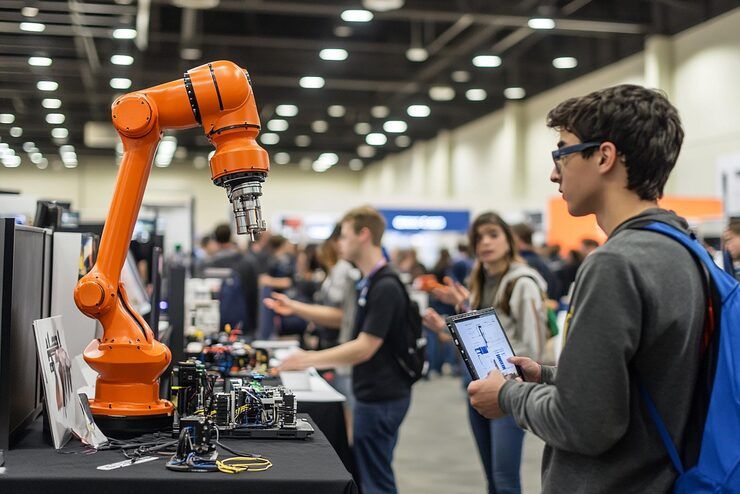
In this article, you will learn how robotics works in small industries, how it improves productivity, and how small business automation solutions are shaping the future.
Understanding the Concept
Robotics in small industries refers to the use of machines that can perform tasks automatically. These machines follow programmed instructions and can handle repetitive or complex tasks.
For example, instead of manually assembling parts, a robotic arm can do it faster and with consistent quality.
Another important concept is robotic process automation for manufacturing. This means using automated systems to handle routine processes like packaging, sorting, or inspection.
In simple terms:
-
Robots reduce manual effort
-
They increase accuracy
-
They improve production speed
Small industries benefit because they can achieve better output without needing a large workforce.
Key Types or Categories
There are different types of robotics used in small industries. Each type serves a specific purpose.
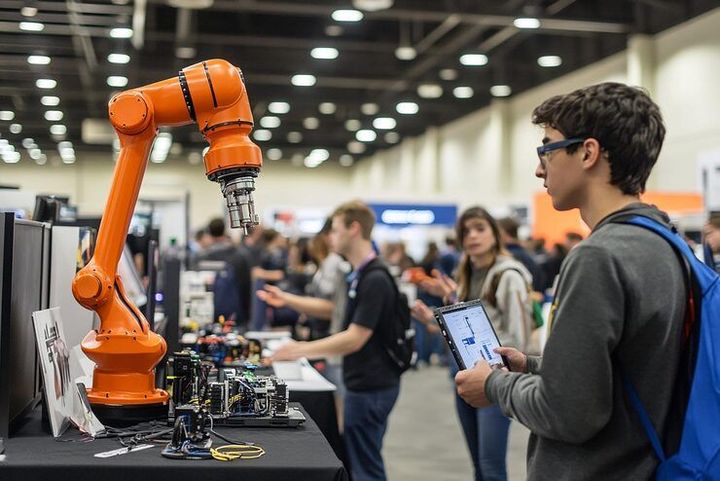
1. Industrial Robotic Arms
These are the most common robots. They look like mechanical arms and are used for:
-
Welding
-
Assembly
-
Painting
-
Material handling
2. Collaborative Robots (Cobots)
Cobots work alongside humans. They are designed to be safe and easy to use.
Key features:
-
Lightweight design
-
Sensors to detect human presence
-
Simple programming
They are ideal for small business automation solutions because they do not require complex setups.
3. CNC Automation with Robotics
CNC stands for Computer Numerical Control. It is used in machines that cut, shape, or drill materials.
When combined with robotics:
-
Robots load and unload materials
-
Machines run continuously
-
Production becomes faster and more precise
4. Mobile Robots
These robots move around the workspace. They are used for:
-
Transporting materials
-
Managing inventory
-
Assisting in warehouses
Important Subsections
Sensors and Vision Systems
Robots use sensors to understand their surroundings. Some robots also use cameras to identify objects.
This helps in:
-
Quality inspection
-
Sorting products
-
Detecting defects
Control Systems
Control systems act like the “brain” of the robot. They guide movements and actions.
Even though the technology behind this is advanced, many modern systems are designed to be user-friendly for small businesses.
How It Works
Understanding how robotics works does not have to be complicated. Here is a simple step-by-step explanation.
-
Task Identification
The business identifies a repetitive or time-consuming task. For example, packing items.
-
Programming the Robot
Instructions are given to the robot. These instructions define how the robot should move and act.
-
Setup and Integration
The robot is placed in the production line. It is connected to existing machines if needed.
-
Execution
The robot starts performing the task automatically.
-
Monitoring and Adjustment
Operators monitor performance and make small adjustments when required.
In robotic process automation for manufacturing, this process is often streamlined so that tasks run smoothly without constant supervision.
Benefits and Advantages
Using robotics in small industries brings several practical advantages.
Increased Productivity
Robots can work continuously without breaks. This leads to higher output.
Better Accuracy
Machines follow exact instructions. This reduces errors and improves product quality.
Time Efficiency
Tasks that take hours manually can be completed much faster with automation.
Improved Safety
Robots can handle risky tasks such as:
-
Heavy lifting
-
Working in high temperatures
-
Handling sharp tools
This reduces the chances of workplace injuries.
Consistency
Every product made by a robot is almost identical. This is important for maintaining quality standards.
Scalability
Small businesses can start with one robot and expand gradually. This makes small business automation solutions flexible and practical.
Real-World Examples or Applications
Let’s look at how robotics is used in real-life small industries.
Example 1: Packaging Unit
A small packaging company uses robotic arms to pack products into boxes.
Before automation:
-
Workers packed items manually
-
Errors were common
-
Output was limited
After automation:
-
Packing became faster
-
Accuracy improved
-
Workers focused on supervision instead of repetitive work
Example 2: Metal Workshop
A small metal workshop uses CNC automation with robotics.
Robots load raw materials into CNC machines and remove finished parts.
Benefits:
-
Continuous operation
-
Reduced downtime
-
Better precision
Example 3: Food Processing Unit
Robots are used for sorting and packaging food items.
They help in:
-
Maintaining hygiene
-
Ensuring uniform packaging
-
Reducing human contact
Example 4: Electronics Assembly
Small electronics manufacturers use cobots to assemble components.
These robots assist workers by handling delicate parts, improving speed and reducing mistakes.
Important Factors to Understand
Before adopting robotics, small industries should consider several important factors.
1. Initial Setup Requirements
Setting up robotics requires planning. Businesses need to:
-
Identify suitable tasks
-
Arrange space for machines
-
Train staff
2. Training and Adaptation
Workers need to understand how to operate and monitor robots.
This does not require deep technical knowledge, but basic training is essential.
3. Maintenance Needs
Robots need regular maintenance to function properly.
This includes:
-
Cleaning
-
Checking parts
-
Updating instructions
4. Customization
Every business is different. Automation consulting for small business helps in choosing the right solution based on specific needs.
5. Integration with Existing Systems
Robots should work smoothly with current machines and processes. Proper planning ensures there are no disruptions.
Future Trends and Industry Insights
The future of robotics in small industries looks promising. Technology is becoming more accessible and easier to use.
Smarter Robots
Modern robots are becoming more intelligent. They can:
-
Learn from data
-
Adjust to changes
-
Improve performance over time
Increased Use of Cobots
Collaborative robots are expected to grow rapidly because they are easy to use and safe for small workplaces.
Affordable Automation Options
Small business automation solutions are becoming more practical for smaller budgets, allowing more businesses to adopt robotics.
Integration with Digital Systems
Robotics will increasingly connect with digital platforms for:
-
Monitoring production
-
Tracking performance
-
Improving decision-making
Expansion Across Industries
Robotics will not be limited to manufacturing. It will expand into:
-
Agriculture
-
Healthcare
-
Retail operations
Conclusion
Robotics is no longer just for large factories. Today, robotics in small industries is helping businesses improve productivity, accuracy, and efficiency.
By using robotic process automation for manufacturing and CNC automation with robotics, small industries can handle tasks faster and more reliably.
While there are challenges like setup and training, the long-term benefits make automation a valuable step forward. With the help of automation consulting for small business, companies can choose the right approach and grow steadily.
As technology continues to evolve, small businesses that adopt robotics early will be better prepared for future demands.