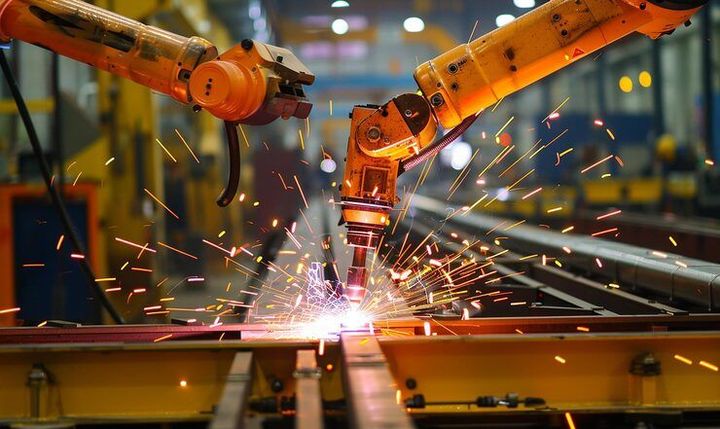
Robotic Welding Systems: Industrial Automation, Accuracy, and Production Benefits
Modern industries depend on speed, precision, and consistent production quality. One of the most important technologies helping manufacturers achieve these goals is robotic welding systems.
Factories building cars often run on automatic setups. Where machines take shape, robotic arms do much of the work. Making concrete blocks? Chances are, it's handled by programmed tools. Electronics assembly lines rely heavily on self-operating units. Metal frameworks go up faster when automation steps in.
Out there in factories, machines handle welds using precise programming rather than human hands alone. These mechanical arms move without pause - guided by sensors and coded patterns - to repeat exact motions every single time. While people once stood at these stations, now systems run smoother, stitching metal together through steady routines.
Now shaping much of smart manufacturing, this tech works alongside industrial robots in everyday operations. Because it pushes factory output higher, shops use less raw material while cutting down on scraps. Even at high speeds, the welding stays steady, batch after batch without slipping off track.
Understanding the Concept
Starting off, robotic welding setups follow coded routines to fuse metal pieces without manual handling. Often found in factories, these units rely on mechanical arms paired with precision instruments. Sensors guide each movement while power sources deliver consistent welds. A central computer oversees operations, adjusting tasks as needed. Built tough, they handle repetitive jobs day after day.
From a starting point deep inside its code, the machine begins to shift position. Following lines written long before, it stretches forward in smooth segments. Not straight away but after a pause, heat builds where metal meets metal. Without rushing, it traces shapes only machines can repeat exactly. When things change slightly, small detectors adjust on their own. Through each second of work, balance stays steady because feedback flows without delay. By the end, what forms is neither guess nor chance.
Robots handle welding tasks by following identical patterns again and again, almost without deviation. Because of this consistency, items come out more precisely made. Fewer mistakes happen during manufacturing runs when machines take over the work.
Robots weld faster when machines handle the work. Conveyor belts move parts into place while cameras check positions before sparks fly. Efficiency climbs once everything links up - robots, sensors, wheels - all doing their jobs without pause.
Some industries using robotic welding systems include:
- Automotive manufacturing
- Aerospace engineering
- Heavy equipment production
- Metal fabrication
- Shipbuilding
- Railway component manufacturing
Out in big factories, machines like these really shine when tasks need to hit the exact same mark every single time. Precision matters more at scale - consistency keeps things running without surprises down the line.
Key Types and Categories
Robotic arms handle spot welding tasks inside factory settings. One kind moves along rails to reach large workpieces. Some units stay fixed while others rotate into position. Machines built for arc welding often feature cooling channels. Different setups support high-volume production needs. Welding robots adapt to precise material thicknesses. Systems using lasers require steady mounting bases. Automation improves consistency across repeated jobs.
Arc Welding Robots
Out of all factory machines, those that weld using arcs show up more than almost any other kind. Electricity jumps across a gap, making enough warmth to stick metals as one piece.
These systems are often used in:
- Vehicle frame production
- Steel fabrication
- Construction equipment manufacturing
Robots that do arc welding tend to make solid joints while working at high speed.
Spot Welding Robots
At each spot, pressure meets electric charge, fusing sheets together through robotic precision. Metal binds where force overlaps sudden heat, point by controlled point.
Few car factories skip this approach when building frames that need countless welds. Where bodies come together, machines repeat the process again and again without pause. Thousands of heat bonds take shape in a single chassis, each one placed with exact timing.
Advantages include:
- Fast cycle times
- Consistent weld positioning
- Reduced production variation
Laser Welding Robots
Focused light beams guide these machines as they join materials with sharp accuracy. A robotic arm moves steadily, delivering heat exactly where needed.
Fine control matters most in certain fields, so these setups fit right in. Where exact results count, they become essential tools. Factories needing tight tolerances often rely on them. Tasks demanding accuracy find a match here. Precision work benefits when using such technology
- Aerospace manufacturing
- Electronics production
- Medical equipment manufacturing
With laser welding, joints come out tidy because there is almost no warping from heat.
Collaborative Welding Robots
Working alongside people without risk is what these robots - known as cobots - are built for.
Besides showing up more often in mid-size factories, these robot welders adapt quickly to new tasks. Their programming feels less complicated than older models once did.
Important Subsections
Welding Sensors and Monitoring Systems
Modern robotic welding systems include advanced sensors that monitor:
- Temperature
- Weld alignment
- Arc stability
- Material positioning
Fine control in welding gets a boost when sensors spot tiny flaws before mistakes pile up. Machines adjust on their own, thanks to live feedback that keeps output steady.
Machine Vision Technology
Cameras snap images so robotic arms know where to go. With these visuals, machines spot parts and shift their actions without help.
Automated Welding Cells
An automated welding cell is a complete production area containing:
- Industrial robots
- Welding tools
- Safety barriers
- Conveyor systems
- Monitoring equipment
From tiny adjustments come smoother operations. Workflow gains shape through cell design. Efficiency rises when tasks align closely. Production moves faster without clutter in the way.
How It Works
Starting off, robotic welders move through steps in a set order. One thing after another, they handle each task without skipping ahead. Following their programming closely, these machines join metal pieces precisely. With every motion timed right, the system advances steadily toward completion.
Design and programming
From sketches on a screen, engineers map out where welds should go. Moving step by step, the machine follows exact points laid down in code. Instructions flow into the robot before any spark appears. Each motion ties back to settings chosen long before the task begins.
Material Placement
Into fixtures or conveyors go the metal parts. For consistent welding, placement must be precise.
Sensor Detection Step Three
Before any weld happens, sensors scan position while cameras verify where parts sit. Alignment gets reviewed by smart eyes that watch how pieces line up. Placement is checked through automated sight systems just prior to joining metal.
Robotic Arm Moves
Starting its motion on a set course, the machine keeps steady heat levels throughout each joint. Though guided by code, it adjusts tilt precisely at every turn. With timing locked in place, weld consistency holds firm across long runs.
Welding Step Five
Heat or electricity flows through the welding torch to connect metal pieces. Throughout its work, sensors inside the robot track every moment of the task.
Inspection and Quality Control Step Six
Once the welding finishes, machines step in to scan each joint for precision. Right after, sensors measure how strong every connection really is.
Fine control emerges when output stays steady, even as factory loads grow heavy. Production keeps pace without slipping quality, simply because systems adapt under pressure.
Benefits and Advantages
Robotic welding systems provide several practical advantages for industrial production.
Improved Accuracy
A single robot might weld identical joints hundreds of times without change. Because accuracy stays consistent, flaws happen less often - so what comes out at the end meets tighter standards.
Faster Production
Day after day, these machines weld without stopping, moving fast through the same jobs. Because of that flow, factories find they can make more in less time.
Better Consistency
Some welds turn out uneven when people do them by hand. Machines repeat the same motion each time without getting tired. A robot does not change its rhythm halfway through a shift. Human hands slip sometimes after long hours. Every joint made by automation looks nearly identical. The machine does not learn slower on certain days.
Reduced Material Waste
Welding done right skips extra materials because mistakes drop off sharply. Mistakes fade when accuracy leads each joint made piece by piece.
Enhanced Workplace Safety
Fires glow, metal spits hot chunks, weights shift without warning. Machines step into those moments instead of people.
Increased Manufacturing Efficiency
Machines taking over tasks inside plants often bring smoother daily operations. Coordination across steps tends to tighten when routines run on programmed systems. Planning output becomes more predictable once sequences follow digital cues instead of paper trails.
Key efficiency improvements include:
- Faster cycle times
- Reduced downtime
- Better production tracking
- Improved quality control
Smart Manufacturing Support
Inside modern production spaces, machines that weld parts together play a key role. These automated helpers fit tightly into connected factory setups where data flows freely between devices.
People reach out through various ways
- Production monitoring systems
- Industrial data platforms
- Automated inspection tools
- Predictive maintenance systems
real world examples applications
Factories everywhere rely on machines that weld metal parts together. These automated helpers work fast, without stopping, across continents.
Automotive Industry
Out there on factory floors, spot welding robots work nonstop through car frame builds. Each robotic arm lands countless welds - never wavering in precision.
Speed goes up, yet frames stay strong when makers apply this method. Building stays solid even as output pushes faster. The process lifts pace without losing shape integrity.
Aerospace Manufacturing
Flying machine builders rely on beam-fusion machines when shaping thin metals needing exact work.
Faults in welds might weaken results - this means robots must work precisely here. Performance ties closely to clean joins, making exact movements essential within manufacturing settings.
Heavy Machinery Production
Heavy steel parts usually show up in farm machines and construction gear. To manage big, repeatable weld jobs, makers turn to arc-welding robots instead.
Electronics Industry
Fine work on tiny electronics often needs exact connections between metal parts. Where space is tight, machines handle the welds with steady accuracy.
Railway and Transportation Equipment
Fault lines in rail parts plus pathways need strong joins that endure weight stress over years. Tough connections keep everything moving when pressure builds across busy routes.
Robots handling welds make output more consistent across such uses.
Key Things to Know
Several factors influence the performance and efficiency of robotic welding systems.
Programming Complexity
Robots that do more need careful setup by trained people. Getting them right means checking every setting before they start work.
Material Compatibility
Some metals act one way when welded. Others behave quite differently under heat. Because of this variation, picking the right technique matters a great deal. Each metal kind needs special attention from those building things.
Maintenance Requirements
Faults creep in if machines built for factories aren’t checked often. Their output slips when upkeep falls behind.
Important maintenance activities include:
- Sensor calibration
- Torch inspection
- Cable checks
- Mechanical alignment verification
Production Volume
Few tasks suit machines better than repeated welds done thousands of times. These automated setups thrive where output must stay constant and fast.
Works With Current Gear
Robots doing welds usually link up with moving belts, machines that check quality automatically, also work under bigger factory-wide control setups.
When systems connect well, tasks move faster while devices talk more clearly. A smooth setup changes how pieces share information across the line.
Future Trends and Industry Insights
Robots that weld are starting to look more like pieces of a bigger, thinking factory network. Smarts inside machines now help them adapt without constant human guidance. Instead of working alone, these arms link into live data flows across production lines. Intelligence once stuck in computers spreads right into the tools themselves. As factories learn faster, so do their metal-fusing robots - growing sharper with time.
AI used in welding
Robots now use smart software to watch welds as they happen. When flaws pop up, the tech changes settings on its own. Not every fix needs a human hand anymore.
Advanced Machine Vision
Now machines spot tricky shapes faster thanks to sharper vision systems. These upgrades help bots adjust on the fly when factory tasks shift. Smarter eyes mean less downtime during changeovers.
Cloud-Based Manufacturing Data
Finding their way into more plants, cloud-linked automation tools track how welds are holding up from one factory floor to another. Machines talk to distant servers, sending updates on each spark and seam made during busy shifts. Information flows without wires, letting supervisors check results even when miles away. These digital threads tie together workshops that once worked alone. Performance data piles up fast, helping teams spot trouble before it spreads too far.
Flexible Automation
Robots today adapt fast, fitting into many factory settings without hassle. Their setup takes less time now, working right alongside people. Flexibility? That’s built in from day one.
Smaller shops find robots easier to work with now. Welding machines fit tighter spaces thanks to smarter designs. Efficiency jumps when automation adapts to limited room. Space-saving setups change how compact plants operate. New methods make robot arms move better in crowded spots. Flexibility helps mini factories adopt tech once meant for big lines.
Predictive Maintenance
Besides spotting early signs of wear, monitoring tools track machine behavior over time. When patterns shift slightly, alerts sound long before breakdowns happen. Instead of waiting for parts to fail, teams respond to subtle changes in performance. Through continuous feedback, systems learn what normal operation looks like. Before damage spreads, maintenance kicks in - guided by real-time signals from sensors.
Less downtime happens because systems stay steady. Work flows better when interruptions drop away.
Sustainable Manufacturing
Finding ways to cut power use, makers now build welders that skip extra steps while helping the planet breathe easier.
Conclusion
Out of metal arms and coded motions comes a new rhythm on factory floors. Where humans once leaned into sparks, machines now glide - steady, unblinking. One after another, seam meets seam with no fatigue, no pause. Instead of rushing workers, there is quiet timing. Precision rides inside each joint, built not by chance but repetition. Safety grows quietly when hands stay clear of heat. Speed does not shout here - it simply accumulates, cycle after cycle. What changes most? The air feels different. Less strain. More control.
Robotic welding shows up everywhere now, whether building cars or crafting spacecraft. As artificial intelligence gets sharper, these machines learn faster. Machine vision helps them see better, adjusting on their own. Smart factories push the pace, making each weld smarter than before. Efficiency climbs when systems talk to one another seamlessly. Adaptability grows without needing constant human input. Future setups will shift tasks smoothly, almost like thinking for themselves. Progress keeps rolling, driven by quiet upgrades behind the scenes.
When factories upgrade how they build things, machines that weld automatically stay key. Not just helpers, these robotic arms make sure every joint meets strict standards. Without them, consistency might slip during long runs. Precision sticks around because the gear works without tiring. Quality stays steady even when speeds increase. Over time, their role only grows more central in making products right.