Non Woven Bag Making Machinery: Types, Working Principles, and Production Benefits
Non woven bags have become an important packaging solution across many industries.
They are widely used for shopping, product packaging, promotional activities, and daily carrying purposes. As businesses increasingly focus on durable and reusable packaging, the demand for non woven bag production continues to grow.
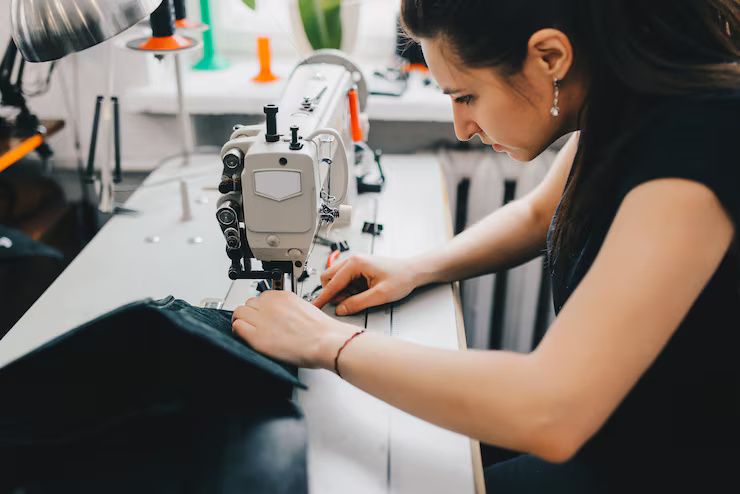
Non woven bag making machinery plays a crucial role in this manufacturing process. These machines transform non woven fabric into finished bags through automated production methods. Modern machinery helps manufacturers achieve consistent quality, improved efficiency, and higher production output.
Understanding how these machines work, the different types available, and their production benefits can help individuals and businesses gain valuable insights into the packaging manufacturing industry.
Understanding the Concept
Non woven bag making machinery refers to specialized industrial equipment designed to produce bags from non woven fabric materials. Unlike traditional woven fabrics, non woven materials are created by bonding fibers together through heat, pressure, or chemical processes.
The machinery converts large rolls of non woven fabric into finished bags through a sequence of automated operations. These operations may include fabric feeding, cutting, folding, sealing, punching handles, and final shaping.
The main objective of these machines is to streamline production while maintaining product consistency. Depending on the machine type, different bag styles and sizes can be produced efficiently.
Non woven bag manufacturing has become popular because the final products are lightweight, durable, reusable, and suitable for a wide range of commercial applications.
Key Types or Categories
Several types of non woven bag making machinery are available to meet different production requirements.
Fully Automatic Non Woven Bag Making Machines
These machines perform most production steps automatically.
Common functions include:
- Fabric feeding
- Cutting
- Folding
- Sealing
- Handle attachment
- Bag counting
Fully automatic systems are commonly used in large-scale manufacturing environments where high production volumes are required.
Semi-Automatic Non Woven Bag Making Machines
Semi-automatic machines combine automated processes with manual operations.
Operators may assist with:
- Material loading
- Handle placement
- Final inspection
- Packaging
These machines are suitable for medium-scale production facilities.
Box Bag Making Machines
Box bags have a structured shape with reinforced sides and bottoms.
These machines are designed to produce:
- Shopping bags
- Retail packaging bags
- Promotional bags
The finished products often provide greater carrying capacity.
D-Cut Bag Making Machines
D-cut bags feature a handle opening shaped like the letter "D."
These machines create:
- Retail carry bags
- Exhibition bags
- Event bags
D-cut bags are popular because of their simple and practical design.
W-Cut Bag Making Machines
W-cut bags include a wider handle opening that improves carrying comfort.
They are commonly used for:
- Grocery packaging
- Retail applications
- Merchandise packaging
Ultrasonic Bag Making Machines
Ultrasonic technology uses high-frequency vibrations to bond materials together.
Instead of traditional stitching, ultrasonic sealing creates strong and clean joints.
This production method helps improve efficiency and product appearance.
Important Subsections
Fabric Feeding System
The fabric feeding system controls how non woven material enters the machine.
A stable feeding mechanism ensures:
- Accurate alignment
- Consistent dimensions
- Smooth production flow
Proper feeding is important for maintaining product quality.
Cutting Mechanism
The cutting unit shapes the fabric according to bag specifications.
Precision cutting helps maintain:
- Uniform bag sizes
- Clean edges
- Reduced material waste
Modern machines often use computerized controls to improve cutting accuracy.
Sealing Technology
Sealing joins different sections of the bag together.
Common sealing methods include:
- Heat sealing
- Ultrasonic sealing
- Pressure bonding
Strong seals contribute to bag durability and reliability.
Handle Formation System
Many non woven bags require integrated handles.
Machines may create handles through:
- Die-cut punching
- Attached handle strips
- Reinforced openings
The handle design depends on the intended application of the bag.
How It Works
The production process follows several organized steps.
Step 1: Material Loading
Large rolls of non woven fabric are loaded into the machine.
The material is positioned carefully to ensure smooth feeding throughout production.
Step 2: Fabric Feeding
The machine pulls the fabric through the production line.
Automatic sensors help maintain proper tension and alignment.
Step 3: Cutting and Folding
The fabric is cut according to predetermined dimensions.
The machine then folds the material into the desired bag shape.
Step 4: Sealing
The folded sections are bonded together using heat or ultrasonic technology.
This step forms the main structure of the bag.
Step 5: Handle Creation
Handle openings are cut or attached depending on the selected bag design.
This stage determines how the finished bag will be carried.
Step 6: Quality Inspection
Machines often include monitoring systems that identify production irregularities.
Operators may also inspect samples periodically.
Step 7: Collection and Packaging
Finished bags are collected, counted, and prepared for distribution.
The completed products are then ready for various commercial applications.
Benefits and Advantages
Non woven bag making machinery provides numerous production advantages.
Increased Production Efficiency
Automation enables continuous manufacturing with minimal interruptions.
This helps improve overall production output.
Consistent Product Quality
Machines follow programmed settings throughout production.
This consistency helps maintain uniform dimensions, appearance, and sealing quality.
Reduced Material Waste
Accurate cutting systems optimize material usage.
Less waste contributes to better resource management.
Faster Manufacturing Cycles
Automated processes complete production tasks quickly.
This allows manufacturers to handle larger production requirements efficiently.
Improved Operational Reliability
Modern machinery is designed for stable and continuous operation.
Reliable performance supports long-term manufacturing activities.
Flexible Production Options
Many machines can produce various bag styles and dimensions.
This flexibility helps manufacturers respond to changing market demands.
Real-World Examples or Applications
Non woven bag making machinery supports production across numerous industries.
Retail Industry
Retail stores frequently use non woven shopping bags for customer purchases.
These bags provide a practical alternative to traditional packaging options.
Grocery Sector
Supermarkets often utilize durable non woven bags for carrying food and household items.
Their strength makes them suitable for repeated use.
Promotional Events
Companies frequently distribute branded non woven bags during exhibitions, trade shows, and marketing campaigns.
The bags help increase brand visibility while providing practical utility.
Healthcare Applications
Hospitals and medical facilities use non woven materials for various packaging and carrying purposes.
These applications often require clean and reliable materials.
Educational Institutions
Schools, colleges, and universities use customized non woven bags for events, admissions, and educational programs.
These bags provide convenience for students and visitors.
Important Factors to Understand
Several factors should be considered when evaluating non woven bag making machinery.
Production Capacity
Different machines support different output levels.
Manufacturers should match machine capacity with expected production requirements.
Material Compatibility
Machines may be designed for specific non woven fabric thicknesses and grades.
Understanding material compatibility helps ensure smooth operation.
Automation Level
Fully automatic and semi-automatic systems provide different operational experiences.
Production goals often influence the preferred automation level.
Maintenance Requirements
Regular maintenance helps maintain performance and equipment longevity.
Common maintenance tasks include:
- Cleaning components
- Lubricating moving parts
- Inspecting sealing systems
- Checking alignment mechanisms
Energy Efficiency
Modern machinery often incorporates energy-saving technologies.
Efficient equipment can help reduce operational expenses and improve sustainability.
Future Trends and Industry Insights
The non woven bag manufacturing industry continues to evolve with technological advancements.
Smart Manufacturing Systems
Advanced monitoring systems are becoming more common in production facilities.
These technologies help track performance and improve production management.
Enhanced Automation
Future machinery is expected to incorporate greater automation capabilities.
This may further improve efficiency and consistency.
Sustainable Production Practices
Manufacturers are increasingly focusing on environmentally responsible production methods.
Resource optimization and waste reduction remain important priorities.
Advanced Sealing Technologies
Innovations in sealing systems continue to improve product strength and production speed.
Ultrasonic technology is expected to become even more sophisticated.
Customization Capabilities
Growing demand for specialized packaging solutions is driving the development of more flexible machinery.
Future systems may support faster design changes and greater product variety.
Industry Expansion
As reusable packaging becomes more widely adopted, demand for non woven bag manufacturing equipment is expected to remain strong across many regions.
This trend continues to encourage innovation and investment in production technologies.
Conclusion
Non woven bag making machinery plays a vital role in modern packaging manufacturing. These machines convert non woven fabric into durable and practical bags through automated production processes. Various machine types, including fully automatic, semi-automatic, D-cut, W-cut, box bag, and ultrasonic models, support different production requirements.
The machinery delivers important advantages such as improved efficiency, consistent quality, reduced material waste, and flexible manufacturing capabilities. Industries including retail, grocery, healthcare, education, and promotional marketing continue to utilize non woven bags for a wide range of applications.
As automation, sustainability, and smart manufacturing technologies continue to advance, non woven bag making machinery is expected to become even more efficient and adaptable. Understanding its types, working principles, and production benefits provides valuable insight into an important segment of the packaging industry.