Guide to Automated Production Lines: Systems, Process, and Benefits
Modern manufacturing has changed rapidly over the past few decades. Many factories now rely on automated production lines to improve efficiency, accuracy, and consistency. Instead of relying entirely on manual work, machines and intelligent systems handle many tasks within the manufacturing process.
An automated production line uses machines, sensors, and control systems to perform production steps with minimal human intervention. These systems can assemble products, move materials, inspect quality, and package finished items.
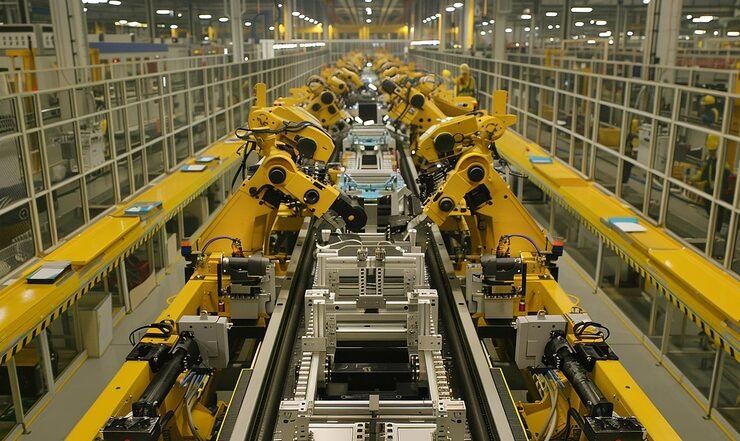
Industries such as automotive, electronics, food processing, and consumer goods commonly use automated manufacturing line systems. From small components to complex machinery, automation helps maintain consistent production output while reducing errors.
Understanding how these systems operate helps explain why automation has become an essential part of modern manufacturing environments.
Understanding the Concept
At its core, an automatic production line is a sequence of connected machines and equipment designed to perform production tasks automatically. Each stage of the line handles a specific operation, and materials move from one station to the next in a continuous flow.
A typical automated assembly line may include:
- Material feeding systems
- Processing machines
- Robotic arms
- Inspection stations
- Packaging units
- Conveyors that move items between stations
The goal of automated production lines is to create a smooth, coordinated process where each machine performs a specific role in the manufacturing sequence.
For example, in a consumer electronics factory, one section of the line may place circuit boards, another may install components, while another performs quality checks. These steps happen in a carefully organized order.
Sensors and control units monitor each stage to ensure the system operates correctly. If an issue occurs, the system can pause or adjust operations.
Key Types or Categories
Automation in manufacturing can take several forms depending on production needs, product complexity, and output requirements.
Automated Assembly Line
An automated assembly line focuses on putting parts together to form a finished product. Machines or robotic arms perform tasks such as fastening, welding, inserting components, or attaching parts.
Common examples include:
- Automotive assembly processes
- Electronics device assembly
- Appliance manufacturing
These systems ensure every product follows the same assembly sequence, which improves consistency and accuracy.
Robotic Production Line
A robotic production line uses industrial robots to perform repetitive or precise tasks. Robots can move quickly and maintain high precision over long periods.
Typical robotic tasks include:
- Component placement
- Material handling
- Welding and fastening
- Product inspection
Robots are particularly useful in environments where precision and speed are critical.
Packaging Line Automation
Packaging line automation focuses on preparing finished products for distribution. This stage may include filling, labeling, sealing, and packing items into containers.
Industries such as food processing and consumer goods often use packaging line automation to handle large production volumes efficiently.
Fully Automated Production Line
A fully automated production line operates with very limited manual intervention. Machines handle nearly every stage of production, from raw material input to final packaging.
These systems rely on advanced sensors, coordinated machine controls, and integrated monitoring systems to maintain continuous production flow.
Automated Manufacturing Line
An automated manufacturing line is a broader term that refers to any manufacturing process that uses automation technologies. It may combine robotics, conveyors, automated inspection, and other equipment to complete production tasks efficiently.
Important Subsections
Several core components support the operation of automated production lines.
Sensors and Monitoring Systems
Sensors detect position, movement, temperature, pressure, or alignment. They provide feedback that allows machines to operate accurately.
Conveyor Systems
Conveyors move materials or products from one station to another. This ensures smooth product flow throughout the production process.
Control Systems
Control units coordinate machine activities. They manage timing, speed, and synchronization across different stations.
Robotic Equipment
Robotic arms and automated tools perform repetitive or high-precision tasks.
How It Works
Understanding how an automated manufacturing line functions is easier when the process is broken into steps.
1. Material Input
The process begins with raw materials or components entering the production system. Feeding units or conveyors move these materials into the first stage of the line.
2. Processing or Assembly
Machines or robotic systems perform tasks such as:
- Cutting
- Drilling
- Welding
- Assembling components
Each station handles a specific operation.
3. Movement Between Stations
Conveyor systems transport items between workstations. Sensors ensure items are correctly positioned before the next step begins.
4. Inspection and Quality Checks
Inspection stations examine products for defects or alignment issues. Cameras or measurement tools verify that each item meets required standards.
5. Final Processing and Packaging
The final stages may include cleaning, labeling, or sealing products. Packaging line automation then prepares items for distribution.
6. Monitoring and Control
Throughout the process, monitoring systems track performance and detect irregularities. If a problem occurs, the system can pause or adjust the operation.
This coordinated workflow allows automated production lines to maintain consistent production output.
Benefits and Advantages
Automated systems provide several important advantages in modern manufacturing environments.
1. Increased Efficiency
Machines can operate continuously with consistent performance. This allows production lines to maintain steady output levels.
2. Improved Precision
Automation reduces human error in repetitive tasks. Machines perform operations with high accuracy and consistency.
3. Better Product Consistency
Each product follows the same manufacturing sequence. This leads to uniform quality across large production batches.
4. Faster Production Speed
Automated equipment can perform tasks faster than manual processes, especially when multiple machines operate simultaneously.
5. Safer Work Environments
Automation can handle tasks that involve heavy lifting, extreme temperatures, or repetitive motion.
6. Improved Process Monitoring
Sensors and monitoring systems provide real-time information about production performance. This helps identify issues early.
Real-World Examples or Applications
Automated production lines appear in many industries around the world.
Automotive Manufacturing
Vehicle factories rely heavily on automated assembly line systems. Robots weld car frames, install components, and apply coatings with high precision.
Electronics Manufacturing
Electronics facilities use robotic production line systems to assemble circuit boards, install microcomponents, and test finished devices.
Food Processing
Food processing plants often use packaging line automation to fill containers, seal packages, and label products quickly and accurately.
Consumer Goods Production
Factories producing items such as appliances, tools, and household products frequently use automated manufacturing line systems to maintain consistent output.
Pharmaceutical Manufacturing
Medicine production environments rely on automated systems for accurate filling, packaging, and inspection processes.
Important Factors to Understand
While automation provides many advantages, several important factors must be considered when designing or operating automated production lines.
System Design
A well-designed production line ensures smooth product flow and balanced workloads between stations.
Equipment Integration
Different machines must work together seamlessly. Proper integration ensures that each station communicates effectively with others.
Maintenance and Monitoring
Regular maintenance keeps machines functioning correctly. Monitoring systems help identify issues before they affect production.
Flexibility
Some production environments require the ability to adapt to different product types or production volumes.
Training and Oversight
Even highly automated environments require trained personnel to monitor operations and handle system adjustments when necessary.
Future Trends and Industry Insights
Automation continues to evolve as new technologies emerge. Future manufacturing environments may include even more advanced automation capabilities.
Some emerging trends include:
- Smarter robotic systems with improved adaptability
- Advanced sensors that provide detailed production data
- Machine learning systems that help optimize production processes
- Flexible automated lines that adjust to different product designs
Factories may increasingly use connected systems where machines share information across the production network. This helps manufacturers analyze performance and improve efficiency over time.
As automation technologies continue to develop, automated production lines will likely become even more capable and flexible.
Conclusion
Automated production lines have become a central part of modern manufacturing. These systems combine machines, sensors, robotics, and control technologies to create efficient and consistent production processes.
From automated assembly line systems to robotic production line environments and packaging line automation, automation plays a key role in producing many everyday products.
By improving efficiency, precision, and reliability, automated manufacturing line systems help industries maintain consistent production while reducing errors. As technology continues to advance, automation will likely remain an essential part of manufacturing development and industrial innovation.