Construction Drilling Machines: Guide to Types, Uses, and Working Principles
Construction Drilling Machines play an important role in modern infrastructure and building projects.
These machines are used to create holes in soil, rock, concrete, and other hard surfaces for construction activities. They support projects such as bridges, roads, tunnels, high-rise buildings, mining areas, and foundation work.
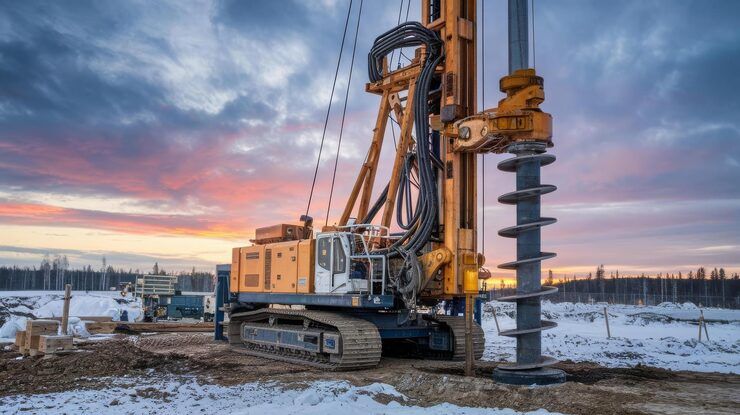
Construction drilling equipment helps workers complete tasks with greater speed, precision, and safety. Without drilling machines, many large-scale construction projects would become slower and more difficult to manage.
Modern drilling machines are designed for different ground conditions and project requirements. Some are compact and suitable for urban construction areas, while others are powerful enough for deep rock drilling in mining and infrastructure projects.
Understanding how these machines work can help people learn more about the construction industry and the technology behind major development projects.
Understanding the Concept
Construction drilling machines are mechanical systems designed to create holes or bore openings into surfaces. These holes may be used for:
- Building foundations
- Utility installation
- Water wells
- Mining operations
- Tunnel construction
- Soil testing
The drilling process usually involves rotating or hammering a drill bit into the surface. The machine applies pressure and motion to break material and remove debris from the hole.
Different drilling methods are used depending on the material being drilled. Soft soil, concrete, and hard rock all require different drilling approaches.
For example, road construction projects may use drilling machines to install support structures below the ground. Similarly, bridge construction often requires deep foundation drilling to support heavy loads.
Key Types or Categories
Construction drilling machines come in several major categories based on their design and purpose.
Rotary Drilling Machines
Rotary drilling machines use rotating drill bits to cut through soil or rock. These machines are common in foundation drilling and mining operations.
They are suitable for:
- Deep drilling
- Large diameter holes
- Stable ground conditions
Rotary systems are widely used in infrastructure development projects.
Percussion Drilling Machines
Percussion drilling machines use repeated hammering action to break hard materials.
These machines work effectively in:
- Rocky terrain
- Concrete surfaces
- Hard underground layers
The hammering force helps penetrate tough materials more efficiently.
Auger Drilling Machines
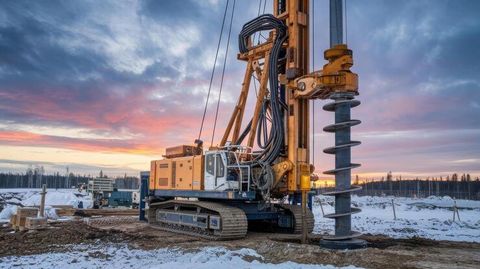
Auger drilling machines use spiral-shaped drill tools called augers.
They are commonly used for:
- Soil drilling
- Fence installation
- Utility pole placement
- Agricultural projects
Auger drills are effective in softer ground conditions.
Directional Drilling Machines
Directional drilling machines create angled or horizontal holes instead of only vertical drilling.
These machines are often used for:
- Underground cable installation
- Pipeline construction
- Urban infrastructure projects
Directional drilling reduces surface disruption in crowded areas.
Important Subsections
Drill Bits
Drill bits are the cutting components attached to drilling machines.
Different drill bit designs are used for specific materials, including:
- Rock drill bits
- Soil drill bits
- Concrete drill bits
- Diamond-tipped drill bits
Selecting the correct bit improves drilling efficiency and performance.
Hydraulic Systems
Many drilling machines use hydraulic systems to generate power and movement.
Hydraulics help control:
- Rotation speed
- Drilling pressure
- Machine stability
- Lifting functions
These systems improve machine control during operation.
Safety Features
Construction drilling involves heavy equipment and high-pressure operations.
Modern machines often include safety features such as:
- Emergency stop systems
- Stability controls
- Protective guards
- Monitoring sensors
- Operator cabins
These features help reduce operational risks.
Mobility and Transport
Some drilling machines are mounted on trucks or crawler tracks for easier movement across construction sites.
Mobile drilling systems improve flexibility and project efficiency.
How It Works
Construction drilling machines follow a step-by-step process during operation.
Step 1: Site Preparation
Before drilling begins, workers inspect the site and prepare the area.
This process may include:
- Ground analysis
- Utility checks
- Equipment positioning
- Safety inspections
Proper preparation helps improve drilling accuracy.
Step 2: Machine Positioning
The drilling machine is placed in the correct location based on project measurements.
Operators ensure the equipment remains stable before drilling starts.
Step 3: Drill Bit Activation
The drill bit begins rotating or hammering into the surface.
The machine applies pressure while the drill bit cuts through material.
Different ground conditions may require adjustments in speed or pressure.
Step 4: Debris Removal
As drilling continues, debris and material fragments are removed from the hole.
Some machines use compressed air or fluid circulation to clear debris efficiently.
Step 5: Hole Completion
Once the desired depth is reached, the drilling process stops.
The completed hole may then support:
| Drilling Purpose | Example Application |
|---|---|
| Foundation Support | Building construction |
| Utility Installation | Underground pipelines |
| Geological Testing | Soil analysis |
| Water Access | Water well drilling |
The hole is prepared for the next construction phase.
Benefits and Advantages
Construction drilling machines provide several practical benefits in modern infrastructure development.
Faster Construction Processes
Drilling equipment helps workers complete excavation and foundation tasks more quickly.
This improves project timelines and operational efficiency.
Improved Precision
Modern drilling machines provide accurate depth and alignment control.
Precise drilling supports structural stability and safer construction practices.
Reduced Manual Labor
Heavy drilling tasks that once required large crews can now be completed with advanced machinery.
This improves productivity and reduces physical strain on workers.
Ability to Handle Tough Materials
Construction drilling machines are designed to work with:
- Rock
- Concrete
- Asphalt
- Dense soil
This flexibility makes them useful across many industries.
Better Safety Conditions
Advanced drilling systems often include monitoring technology and operator protection features.
These systems help reduce operational hazards on construction sites.
Support for Large Infrastructure Projects
Large projects such as highways, tunnels, airports, and bridges depend heavily on drilling equipment for foundation and structural work.
Without these machines, many infrastructure developments would become far more difficult.
Real-World Examples or Applications
Construction drilling machines are used in many real-world environments.
High-Rise Building Construction
Tall buildings require deep and stable foundations.
Rotary drilling machines help create strong support structures below the ground.
Road and Highway Projects
Road construction teams use drilling equipment for:
- Bridge supports
- Road barriers
- Sign installation
- Drainage systems
Drilling improves structural reliability and construction efficiency.
Mining Operations
Mining industries use drilling machines to access underground mineral deposits.
Powerful rock drilling systems help create tunnels and extraction pathways.
Water Well Drilling
Water drilling machines create deep holes to access underground water sources.
These systems are important in agricultural and rural areas.
Tunnel Construction
Tunnel projects use specialized drilling equipment to cut through rock and soil.
Examples include:
- Railway tunnels
- Metro systems
- Highway tunnels
Directional and rock drilling technologies are especially important in these projects.
Important Factors to Understand
Several important factors influence drilling machine performance and project success.
Ground Conditions
Different soil and rock conditions require different drilling techniques.
Hard rock may require percussion drilling, while soft soil may work better with auger systems.
Machine Size
Construction projects vary greatly in scale.
Large infrastructure projects often require heavy-duty drilling equipment, while smaller projects may use compact machines.
Operator Skill
Machine operators must understand drilling controls, safety procedures, and ground analysis.
Proper operation improves efficiency and reduces risks.
Maintenance Requirements
Regular equipment maintenance helps improve reliability and machine lifespan.
Important maintenance tasks include:
- Lubrication
- Hydraulic inspection
- Drill bit replacement
- Engine checks
Well-maintained equipment performs more effectively.
Environmental Considerations
Construction drilling can create noise, dust, and ground vibration.
Many modern machines are designed to reduce environmental impact through quieter operation and improved efficiency.
Future Trends and Industry Insights
Construction drilling technology continues evolving as infrastructure demands increase worldwide.
Smart Monitoring Systems
Modern drilling machines increasingly include digital monitoring systems.
These technologies help operators track:
- Drilling depth
- Pressure levels
- Machine performance
- Ground resistance
Real-time monitoring improves accuracy and operational safety.
Automation and Remote Operation
Some advanced drilling systems now support partial automation and remote control functions.
This reduces direct exposure to hazardous environments.
Energy-Efficient Equipment
Manufacturers are developing more energy-efficient drilling systems to reduce fuel consumption and environmental impact.
This trend supports sustainable construction practices.
Advanced Drill Materials
New drill bit materials improve durability and cutting performance.
Diamond-coated and reinforced materials help machines work more effectively in hard rock conditions.
Urban Infrastructure Expansion
Growing cities continue increasing demand for underground infrastructure projects such as tunnels, pipelines, and utility networks.
Directional drilling and compact drilling systems are becoming more important in urban environments.
Conclusion
Construction drilling machines are essential tools in modern infrastructure and industrial development. They help create foundations, tunnels, utility pathways, and underground access points for many types of projects.
Different drilling technologies such as rotary, percussion, auger, and directional drilling support a wide range of construction environments and ground conditions. These machines improve efficiency, precision, and operational safety across the industry.
As technology continues advancing, construction drilling equipment is becoming smarter, more efficient, and better suited for complex infrastructure demands. Understanding how these machines work provides valuable insight into the engineering processes behind modern construction and large-scale development projects.